 Kitchen Rush: Understaffed
Blog · 25 October 2026
Learn the kitchen: zones, trays and the moving bottleneck
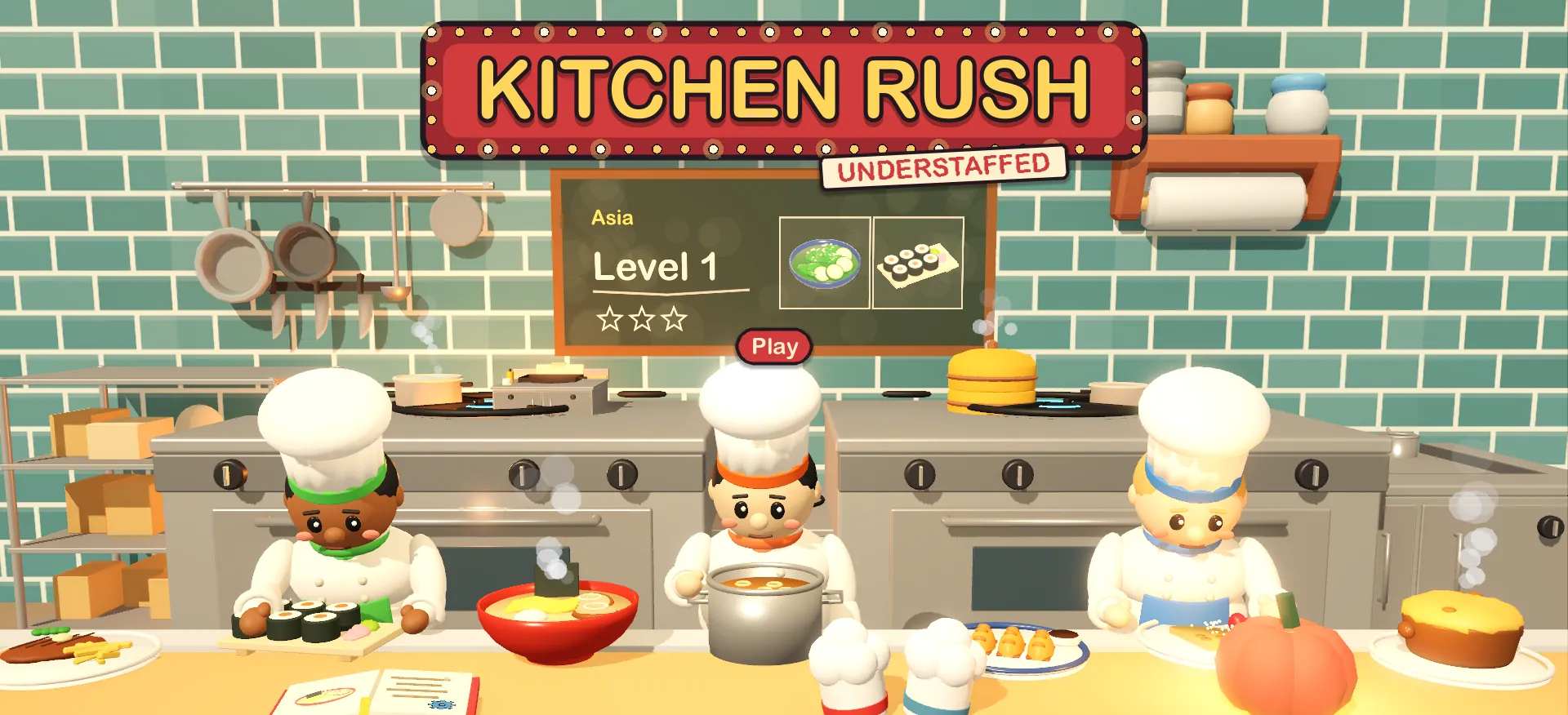
Every dish in Kitchen Rush makes the same trip a real kitchen does: out of the crates, through prep and cutting, onto a cooker, and out through the pass. Knowing that trip is how you stop it jamming.
The line, zone by zone
- Prep (green): washing, peeling, mixing. Raw ingredients come out of the crates here.
- Cutting (orange): slicing, dicing, the chopped salad.
- Cooking (red, and in some kitchens a second cooking zone such as the sushi bar or the grill): what cooks keeps cooking on its own, unless a dish needs the chef to stay at it.
- The pass (yellow): plating, and handing dishes to the waiters.
- The dish pit (blue): clean plates. Forget it and the pass runs out of plates.
Trays between zones
Zones hand work to each other through trays. Prep fills the prepped tray, cutting fills the cut tray, the cooks take from it. A full tray means the zone before it is ahead; an empty one means the next zone is about to wait.
The bottleneck moves
Each dish leans on a different zone. A cold starter is all prep and cutting; a grilled main ties a chef to the grill; a batch dish, like a rice cooker load or a tray of baklava, fills the cooker for a while and then serves several plates. As the tickets change, so does the slow spot. Watch the trays and the tickets, and move a chef before the jam, not after.
Chefs have knacks
Every chef is faster at some zones and slower at others. The best brigade is not the same for every episode, which is why replaying one for a better score is worth it.